
When you begin planning a major remodeling project, one of the first, and most important, questions to answer is: Where should you stay during a renovation?
For some homeowners in Northern Virginia, living at home is perfectly manageable with the right preparation. For others, the noise, dust, and disruption quickly become overwhelming. And for some projects, the home simply won’t be habitable for a period of time.
This article is designed to help you make the best decision for your comfort, your health, and your daily life—whether that means staying put or temporarily relocating.
1. Start With This Question: Is Your Home Habitable During the Renovation?
Before you consider coping strategies, temporary kitchens, or creative living zones, start by evaluating whether your home will be livable during construction.
Some remodels create conditions that homeowners don’t expect, such as:
- Dust and debris that spreads beyond the boundaries of the renovation space
- Limited access to plumbing or electricity
- Strong fumes from adhesives, spray foam insulation, finishes, or paint
- Noisy work beginning as early as 7–8 AM
- Refinishing hardwood flooring that requires no one to be on the finished surface for several days (between 5-10 days, depending on the type of finish)
- Structural or mechanical work that temporarily impacts heating or cooling
In these situations, the first step in deciding where to stay during the renovation is to recognize when the home simply isn’t safe or functional. Your design-build team can help you understand this early, so you can plan ahead.
2. Can You Carve Out a Livable Zone Inside Your Home?
If your remodel affects only part of the home, ask whether you can seal off a room or section that will remain (for the most part) clean, quiet, and comfortable.
Good candidates include:
- A finished basement
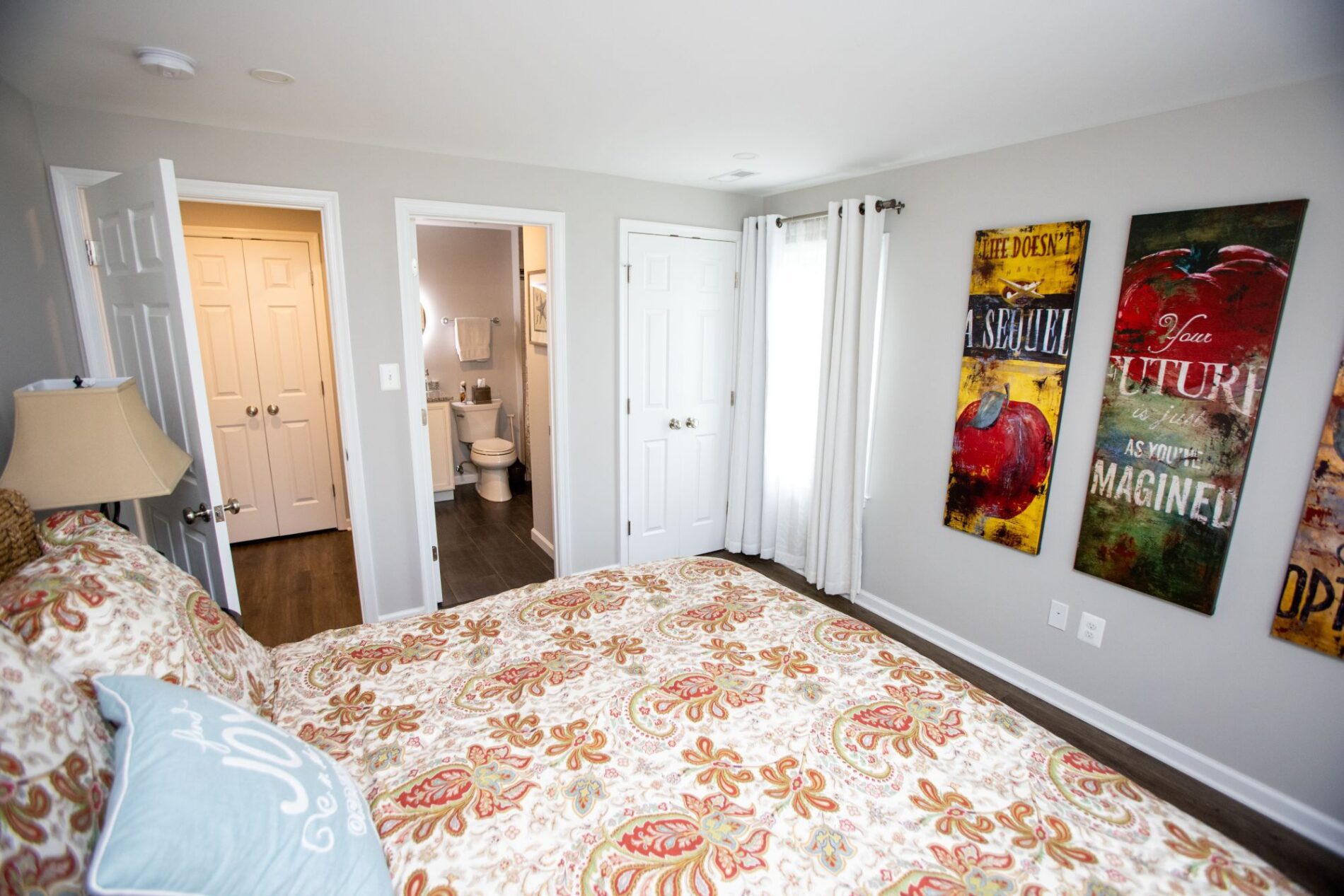
- A guest bedroom
- A bonus room over the garage
- A den or secondary living space
- A detached addition that has its own separate HVAC system and a full bathroom.
These can serve as short-term “micro living spaces” with a bed, small seating area, and basic conveniences. In many Northern Virginia homes—particularly colonials and split-levels—families can live downstairs in the basement while the kitchen or first-floor layout is reconfigured.
If a room like this exists and can be closed off from the construction zone, staying at home may be a reasonable choice.
3. Will You Still Have the Essentials You Need?
A Functional Bathroom
If your only full bathroom is part of the project, or plumbing will be shut off for periods of time, staying at home becomes difficult. Even with a nearby gym or friendly neighbors, the inconvenience adds up quickly.
A Temporary Kitchen Setup
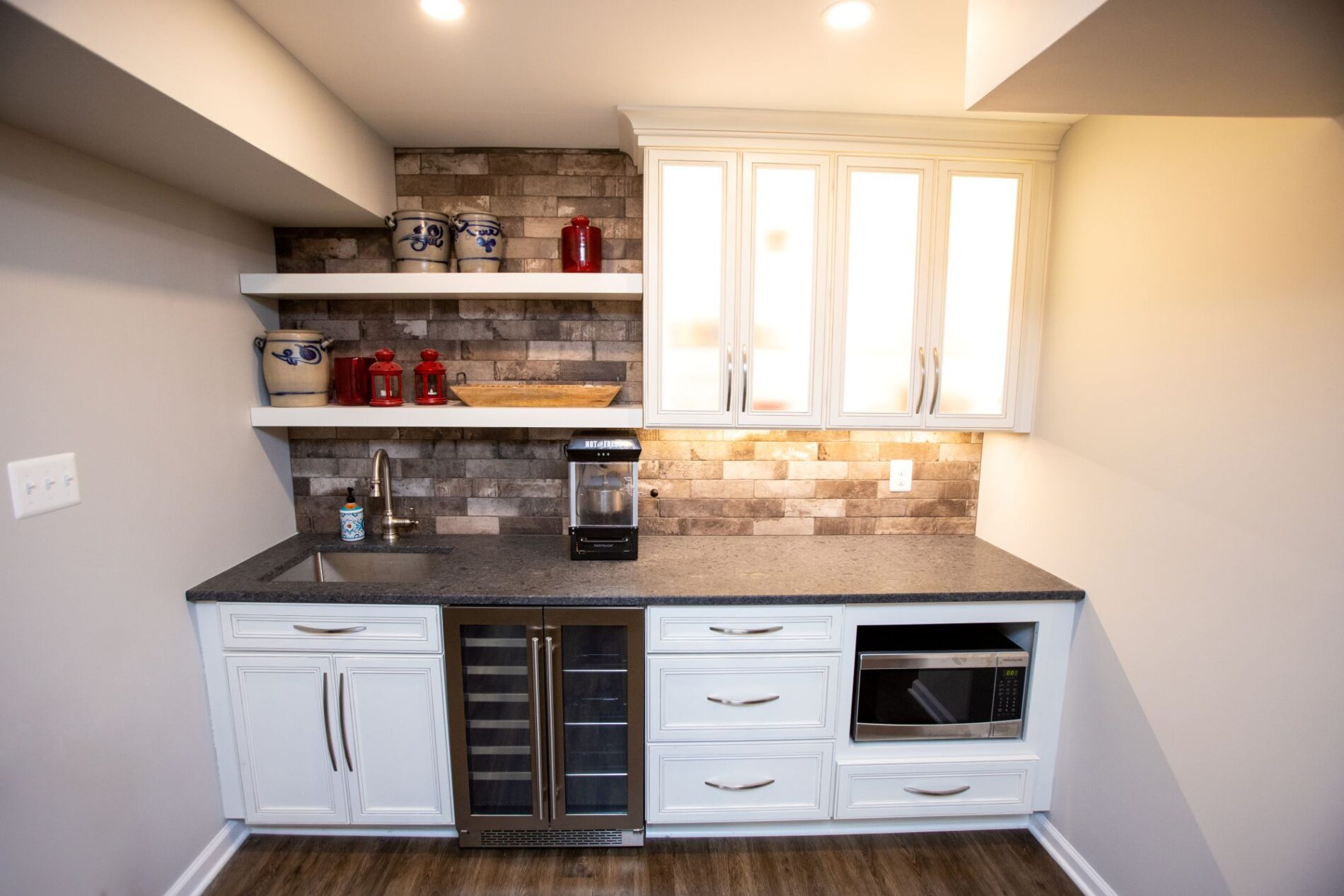
Many homeowners are surprised by how creative they can be with meal prep during a kitchen remodel. A temporary kitchen might include a microwave, toaster oven, hot plate, slow cooker and a grill. (Northwood will loan some of these items to help our clients set up a temporary kitchen). But you still must consider where you will wash your dishes and cookware. The easy button option is to stock up on paper plates, plasticware and paper cups.
For some families, this type of set-up is totally workable. For others, especially those who cook frequently or have children with dietary needs, it’s stressful and unsustainable.
A big part of deciding where to stay during a renovation is knowing your own habits and tolerance level.
4. What About Your Belongings? Storage Impacts Your Living Space
Construction zones need to stay clear, which means furniture, décor, and personal items will be moved out of the way. Consider:
- Renting a POD or portable storage container
- Using a storage unit
- Converting a garage, screened-in porch or attic into temporary storage
If a large portion of your home must be emptied, staying in the remaining space may feel tight or uncomfortable. This alone may push some homeowners to relocate for part—or all—of the project.
5. Even If You Stay Home, You May Want to Leave During the Most Disruptive Phases
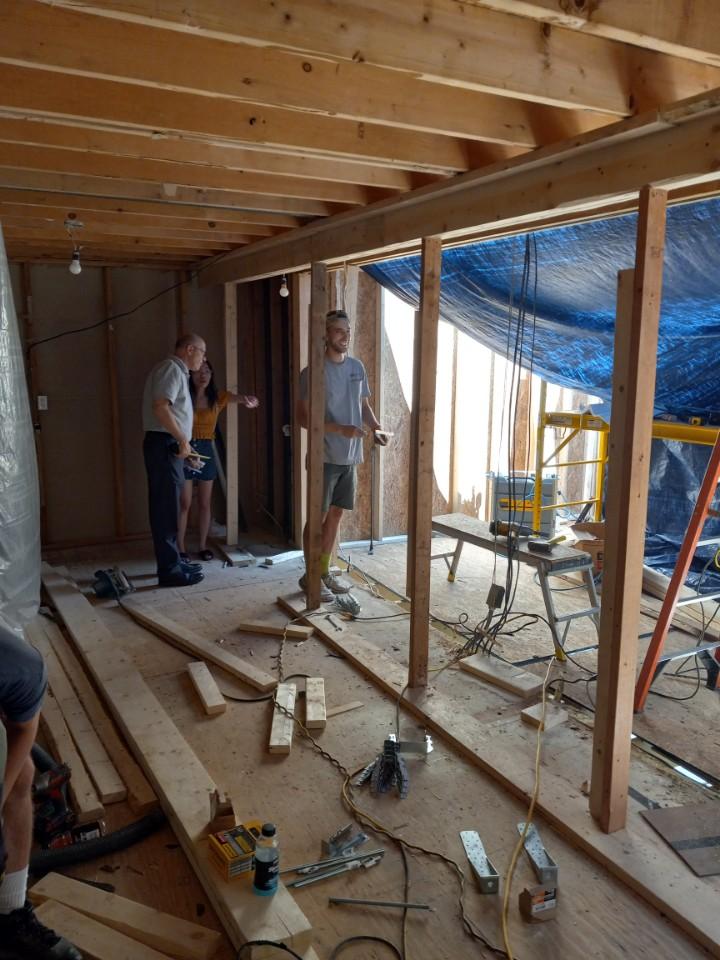
Many homeowners choose a hybrid approach: they live in the home for most of the remodel, but temporarily leave during the messiest and loudest stages, including:
- Demolition
- Drywall installation and sanding
- Major plumbing or electrical transitions
- Flooring refinishing
These “escape windows” are ideal opportunities for short-term relocation:
- A weeklong stay at an Airbnb in Reston, Alexandria or Arlington
- A family vacation to Chincoteague or Virginia Beach
- A relaxing mini escape to the Shenandoah Valley or Blue Ridge Mountains
A Real-Life Example: A Vienna Remodel Using the Hybrid Approach
One of our current projects in Vienna is a whole-house renovation where the homeowners have opted for a flexible arrangement. While the family is not living in the home full-time, the husband still maintains a functional office upstairs—located just beyond the active work area.
Each morning, he stops by to spend a few hours in his office answering emails, handling business tasks, and keeping up with his routine. When the construction activity picks up or the noise becomes more intense, he simply packs up, heads out to run errands, and then returns to their temporary residence.
It’s a great example of how staying home doesn’t have to be all-or-nothing. You can use the house strategically even when you’re not living there full-time.
6. What’s Your Psychological Endurance?
Construction isn’t just physically disruptive; it’s mentally draining. Noise, clutter, altered routines, and people in your home daily can take a toll.
Ask yourself:
- Do I handle disorder well, or does it stress me out?
- How much noise can I tolerate?
- Will daily foot traffic in and out of the house make me anxious?
- If it is winter and the mechanical system must be turned off, will a space heater be sufficient to keep me warm?
Some homeowners can cope for months; others feel overwhelmed after a week. There’s no right or wrong answer, but an honest assessment of what you can tolerate will keep you grounded.
7. Consider Health, Age, Comfort, and Mobility
Where to stay during a renovation may come down to personal comfort and safety.
You may want to relocate if:
- You have asthma, allergies, or respiratory sensitivities
- You’re recovering from surgery
- You have mobility challenges that temporary setups can’t accommodate
- You’re older and need predictable pathways and routines
- You have young children who need quiet naps or clean, safe floors
- Your pets don’t handle noise or strangers well
Temporary housing—even for just the most disruptive phases—may be the kinder, safer option.
8. Do You Need a Quiet, Private Space to Function?
For homeowners who work from home, this is a major consideration. Conference calls, focused work time, and project tasks all require a level of quiet that construction simply won’t allow.
If your home cannot offer a separate, quiet escape, even temporarily, relocating may be the more productive choice.
9. Your Ability to Cope Matters More Than You Think
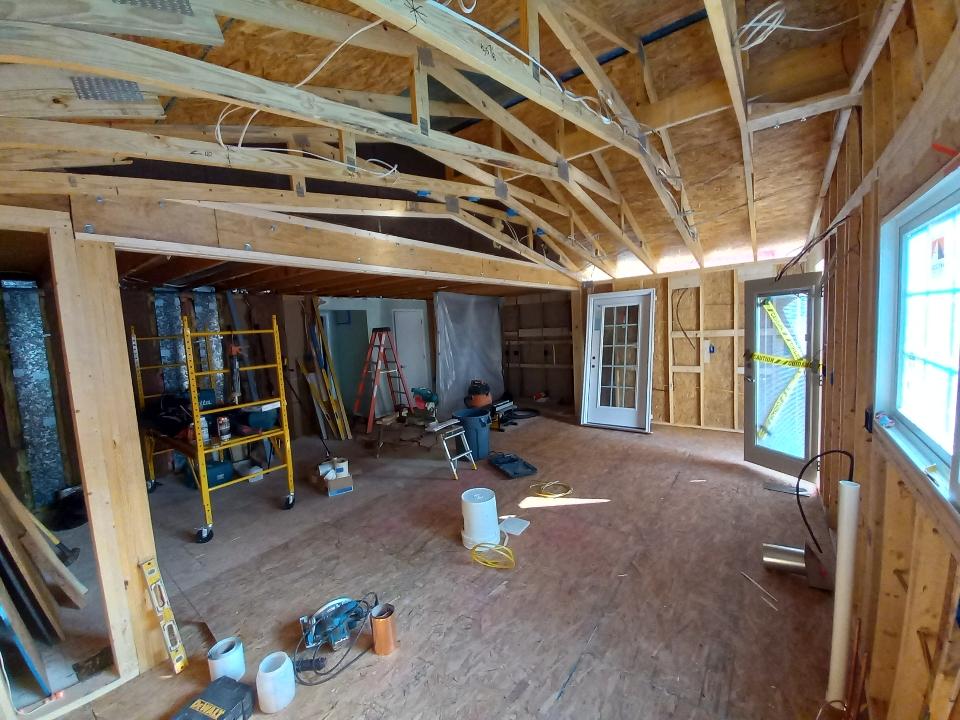
Every renovation has ups and downs. The real question is how much daily disruption you can absorb before it affects your quality of life.
If living at home will create stress, conflict, or overwhelm, choosing to stay elsewhere can make the entire remodel feel smoother and more enjoyable.
Remodeling is the ultimate emotional roller coaster as it can test you in ways you didn’t think were possible. Read our article: The Emotional Journey of Home Remodeling
10. When It’s Better to Stay Somewhere Else Entirely
Relocating may be the best option when:
- The remodel affects multiple floors or the entire main living level
- Kitchen and bathrooms are inaccessible at the same time
- Plumbing, HVAC, or electrical systems will be out of service
- There is significant structural work
- You value predictability, privacy, or quiet
- Your health requires a cleaner or calmer environment
In these cases, consider:
- A short-term rental in Northern Virginia
- An extended-stay hotel
- Staying with family or friends
- A temporary apartment lease
- A local getaway during the most disruptive weeks
Your home will feel brand new when the remodel is complete, so choose an accommodation that helps you stay comfortable and confident throughout the process.
There’s No One Right Answer—Only the Right Answer for You
Deciding where to stay during the renovation depends on your home’s layout, the scope of your project, your daily routines, and not to be dismissed, your personal comfort level.
Whether you stay at home or relocate, Northwood Construction is here to help you plan ahead, understand what to expect, and make the choice that best supports your safety, sanity, and lifestyle. Ready to discuss a renovation project? Schedule a consultation.