
[rank_math_breadcrumb]
When homeowners start thinking about remodeling, return on investment often comes up. How much will a new kitchen add to the value of the house? Will a bathroom remodel pay for itself? Which projects offer the best return at resale?
Those are reasonable questions. A remodeling project is a significant investment, and homeowners should understand what that investment may mean for their home’s value. But we’ve always found it a little backward to evaluate a remodel primarily by what it might someday be worth to the next person who owns your house, especially if you plan to live there for 15 or 20 years.
After decades of remodeling homes in Northern Virginia, we’ve seen another kind of return that is much harder to calculate but much easier to experience. It’s the return that comes from having a home that works better and fits the way you actually live. We call it: Return on Enjoyment.
Maybe you finally enjoy cooking in your kitchen instead of fighting with a layout that hasn’t worked for years. Maybe you start inviting people over again because you’re proud of your home. Perhaps the upstairs is actually comfortable in July, or you simply stop feeling irritated every time you walk into a room you’ve wanted to change for the last decade.
You won’t find those things translated into numbers on a Cost of Remodeling Guide, but if you’re planning to stay in your home for years to come, they may be the returns that matter most.
There Comes a Point When You Just Can’t Live With It Anymore
We’ve met plenty of homeowners who have lived with the same kitchen or bathroom for 20 or 30 years. They’ve raised children, paid tuition, focused on their careers, paid down the mortgage, and put their financial resources toward other priorities. The house worked well enough, so remodeling stayed somewhere toward the bottom of the list.
Until one day, it doesn’t.
The oak cabinets, worn flooring, or cramped layout that you’ve tolerated for years suddenly feels different. You don’t necessarily want to move, but you’re simply tired of living with a part of the house that no longer works for you.
As Northwood owner Bob Benedict puts it, there’s often a point when a homeowner is thinking, “I just can’t live with this anymore.”
That may not sound like a financial reason to remodel, because it isn’t. It’s a quality-of-life reason. For homeowners who have spent years putting other financial priorities first, deciding it’s finally their turn to enjoy their home can be a very real return.
Sometimes the Return Is Being Proud to Invite People In
One question we often ask homeowners during our first conversations is how they entertain. Do they host holidays and birthdays? Do they have friends over for dinner? Where do people gather when they come over?
Over the years, we’ve noticed an interesting answer: “We’d like to entertain more.”
That statement can mean a lot. Sometimes the kitchen isn’t large enough for everyone to gather comfortably, or the layout makes hosting difficult. Sometimes homeowners also say they don’t feel good about having people in their home because the spaces feel dated or no longer represent them.
“I think embarrassment is a really powerful motivator,” Bob says. “People may not come out and say they’re embarrassed by their house, but they’ll tell us they’d like to entertain more.”
We’ve seen that feeling change after a remodel. One homeowner who had lived with an older kitchen for years told us she heard guests repeatedly comment afterward that the renovated space looked like a model home.
That’s a real return for our clients. A remodeled kitchen won’t automatically make someone more social, but we’ve seen how differently homeowners use their homes when they’re genuinely happy (and proud) with them. Holidays move back to their house, and family stays longer because the home has become a place they want to share again.
The Best Improvements Aren’t Always the Ones You Show Off
Another type of return is even harder to photograph: comfort.
Northern Virginia has plenty of homes where the upper floor struggles to stay comfortable during the hottest part of summer. During remodeling, we’ve opened walls in older homes and found minimal insulation and, occasionally, none. We’ve even encountered similar problems in much newer homes.
For example, on one recent project, the garage in a three-year-old home was so hot that the homeowner had to open the garage door just to make the space tolerable. After we investigated, we discovered the walls and attic hadn’t been insulated. Bob’s description after stepping inside was pretty straightforward: “It was like an Easy-Bake Oven.”
Adding insulation isn’t the glamorous part of remodeling, and nobody invites the neighbors over to admire what’s inside the walls. But improving insulation while walls are already open can make an enormous difference in how comfortable a home feels long after the project is complete.
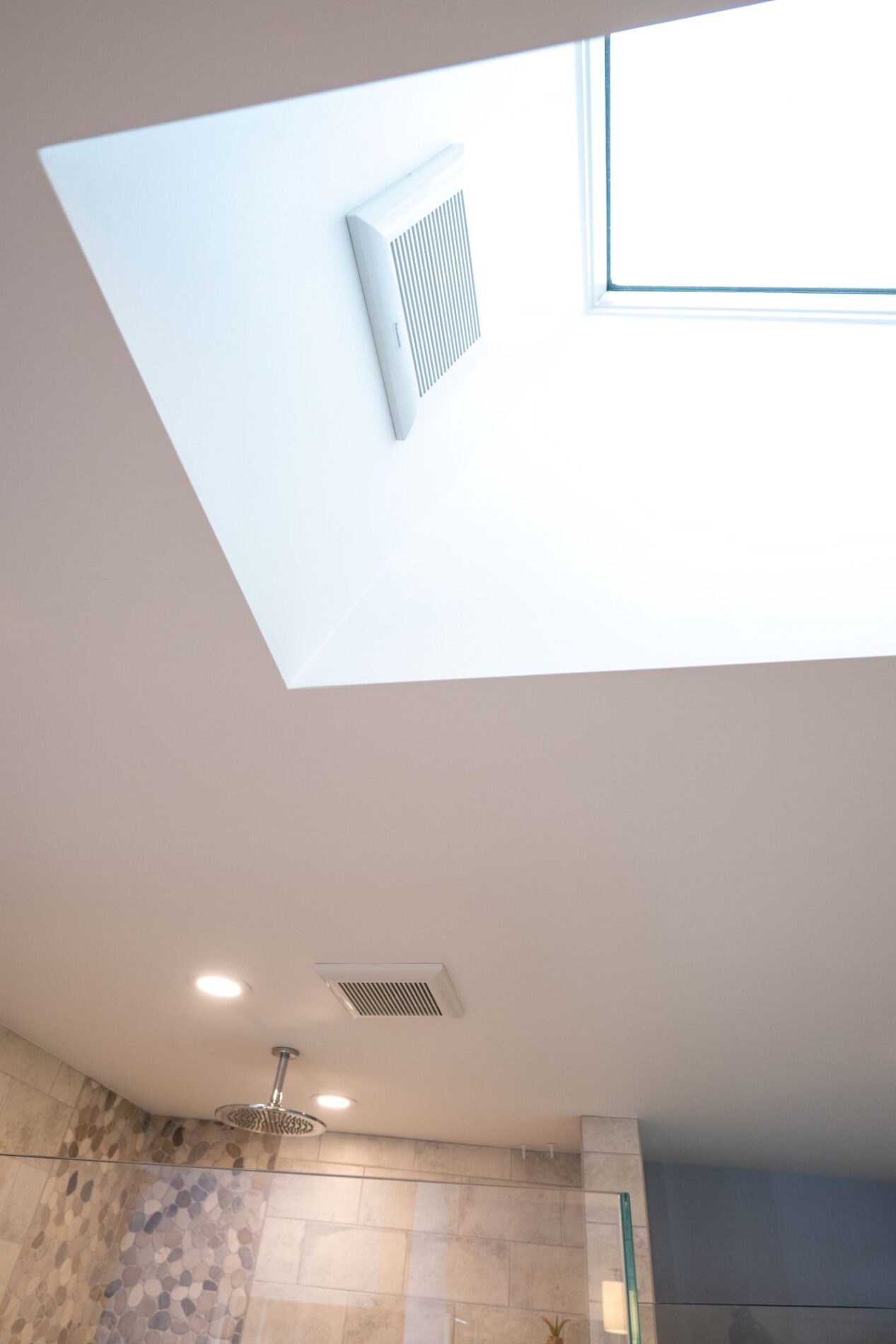
The same principle applies to thoughtful lighting and ventilation. A kitchen with layers of dimmable lighting can be bright when you’re preparing dinner and softer when you’re relaxing in the adjoining family room at night. A properly planned bathroom exhaust fan (as pictured here) can manage moisture and then shut off automatically rather than running unnecessarily for hours.
These details rarely become the stars of finished-project photos, yet they’re often among the improvements homeowners appreciate most because they quietly make the house more comfortable every day.
A Good Remodel Removes Friction From Everyday Life
Some of the most meaningful returns from remodeling come from solving small frustrations homeowners have learned to work around.
For a young family, that might mean creating a well-designed drop zone where backpacks, shoes, and sports equipment have somewhere to land instead of piling up near the door or on the kitchen floor. With the number of phones, tablets, and other devices in today’s homes, it could also mean creating a dedicated charging area so cords and electronics aren’t constantly scattered across the kitchen counter.
We’ve even started thinking of the charging station as the modern version of the kitchen junk drawer: a designated place where all of those necessary-but-not-particularly-attractive things can disappear while they’re not being used.
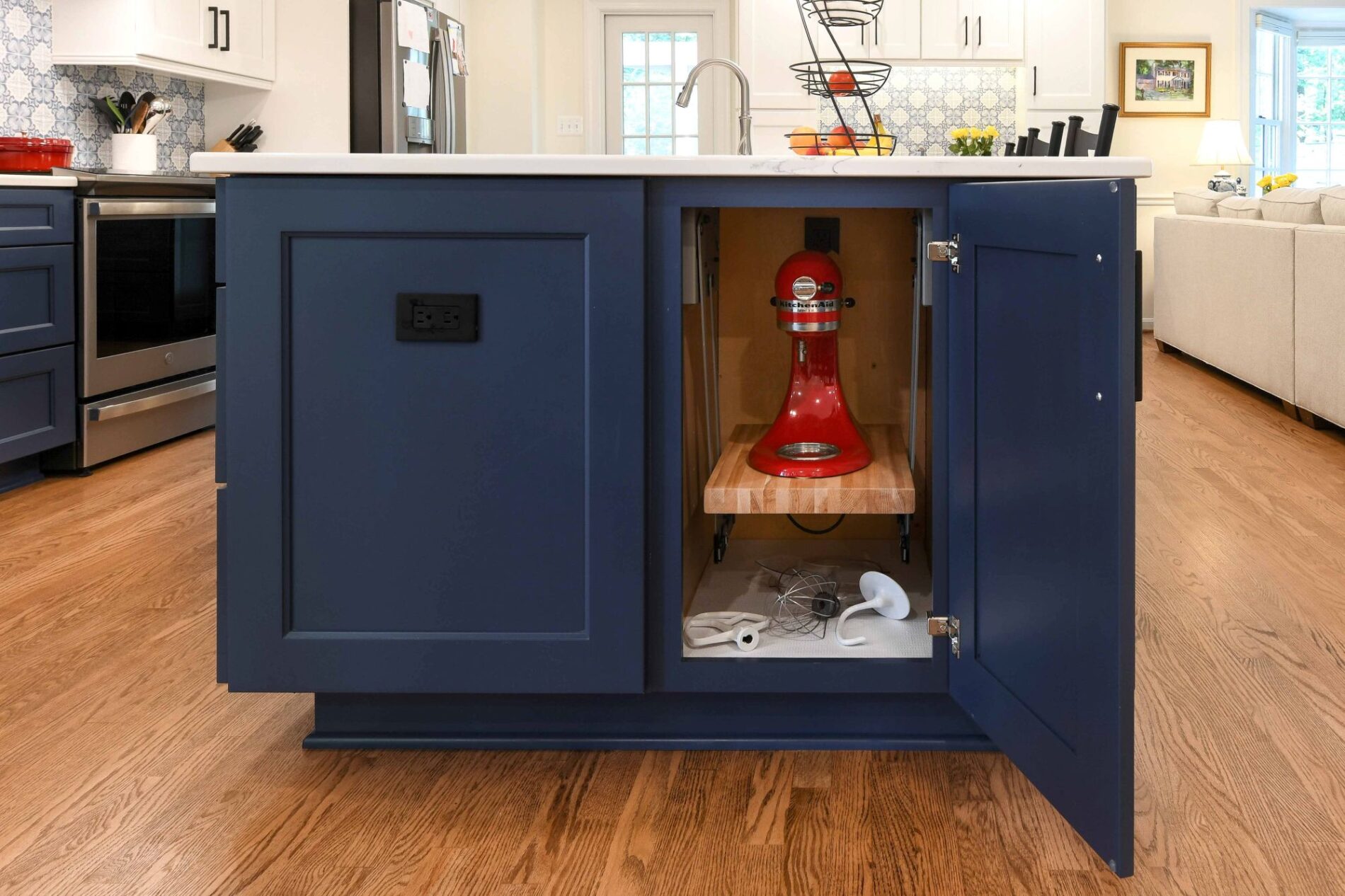
Good design can also make routines easier.
- If someone loves to bake, it makes sense to think about where the heavy mixer lives and to keep pans, ingredients, and baking supplies nearby rather than storing them throughout the room.
- For the homeowner who dislikes cleaning grout, larger-format tile or a different shower-pan material may reduce bathroom maintenance.
- For someone who loves to entertain, the solution could be seating that allows guests to gather without standing in the cook’s way, or a second sink that gives dirty glassware somewhere to go while food preparation continues.
None of these choices is particularly dramatic on its own. Collectively, however, they remove the repeated little frustrations that make a house harder to live in than it needs to be. Instead of constantly adapting to the house, the house begins adapting to the people who live there.
Designing for the Years You’re Actually Going to Live There
One question we routinely ask homeowners is, “If you do this remodel, how long do you think you’ll stay in your home?”
The answer matters because someone remodeling to sell in two years makes different decisions than someone who expects to live there for another 10 years or more. If you’re planning to stay, it makes sense to think beyond what a future buyer might want and consider what will work better for you now, as well as how those choices might continue serving you as life changes.
Sometimes that means making subtle decisions during a remodel that provide more flexibility later. A slightly wider bathroom doorway may feel more comfortable today and make mobility easier later. A shower bench can be useful for everyday routines now while also providing a place to sit if you ever need it. A taller vanity may simply feel better on your back.
These don’t have to be features that make a home look as though it was designed around aging or accessibility. They’re thoughtful design choices that let the home keep working well through different stages of life without unnecessarily limiting your options later.
Maybe We Need a Broader Definition of ROI
Financial return matters, and we would never suggest otherwise. But if you’re planning to remain in your home for many years, it seems incomplete to evaluate a remodel primarily by what the next owner might someday be willing to pay for it.
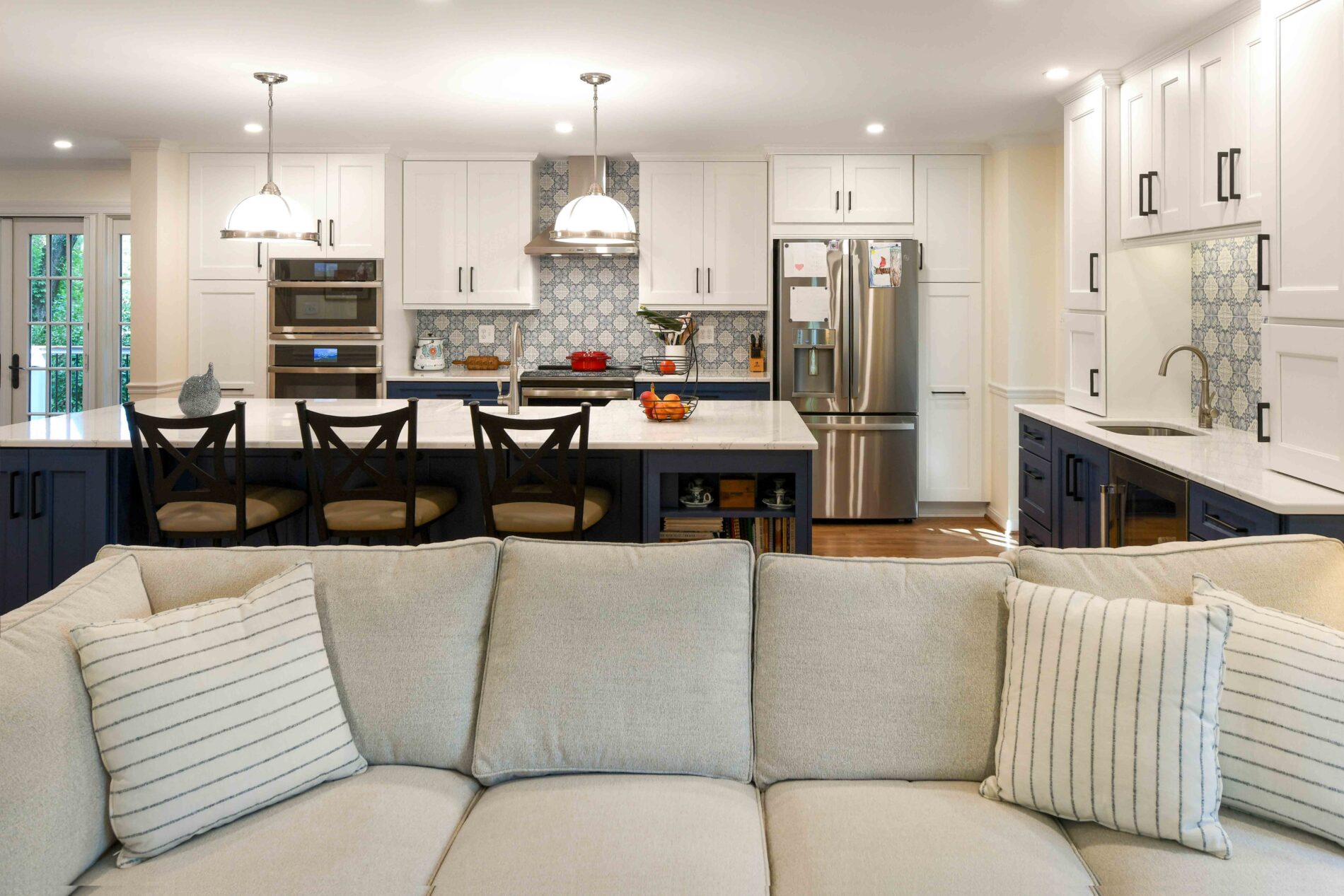
There is a certain appreciation you get when you walk downstairs every morning and genuinely like your kitchen. There is value in being comfortable upstairs during a Northern Virginia summer, having a place for the backpacks instead of stepping over them, and inviting everyone to your house for Thanksgiving because you’re finally excited to host again.
Those returns are hard to calculate as a percentage, and they won’t show up on an appraisal. But homeowners experience them hundreds or even thousands of times over the years they continue living in their homes.
Maybe that’s the return on remodeling we should be talking about more often: not simply return on investment, but return on enjoyment.
What Would Make Your Home Better to Live In?
If you’ve reached the point where your home no longer works the way you want it to, it may be worth thinking about the return you could get from changing it—not someday when you sell, but in the years you’ll spend living there first.
At Northwood Construction, we help Northern Virginia homeowners think through what isn’t working, what could work better, and which remodeling decisions will make the biggest difference in everyday life. If you’re starting to think about a remodel, let’s talk about what would make your home better for you.